

Table of Contents
- Why Proper Storage Matters for Raw Honey
- Best Containers for Honey Storage
- Ideal Storage Temperature and Location
- Understanding Crystallization and How to Liquefy Crystallised Honey
- Shelf Life of Raw Honey and Signs of Spoilage
- Common Storage Mistakes to Avoid
- Long-Term Storage for Bulk Quantities
- Frequently Asked Questions
Last Updated: September 19, 2026
Why Proper Storage Matters for Raw Honey
Raw unfiltered honey is different from the processed versions you find in supermarkets. It contains living enzymes, pollen, and propolis, all the beneficial compounds that make it special. But these same elements mean it needs proper care.
Store raw honey incorrectly and you risk fermentation, moisture absorption, or unnecessary crystallization. Store it right and your honey stays fresh for years, sometimes decades.
The good news: storing raw honey is straightforward once you understand the basics. This guide covers everything you need to know about how to store raw unfiltered honey properly.
Best Containers for Honey Storage
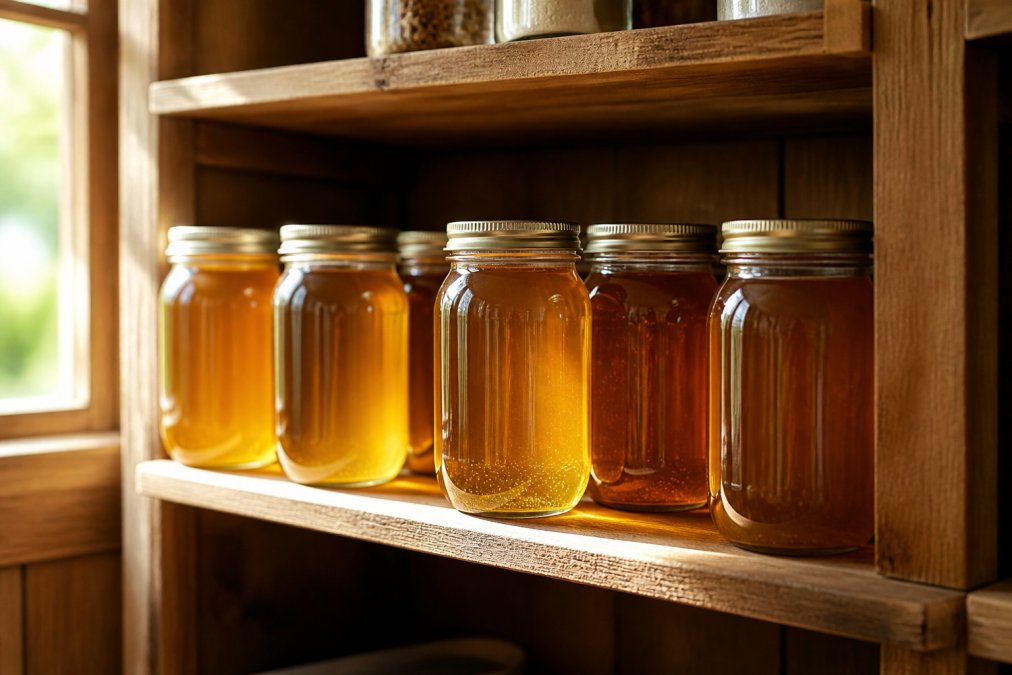
Glass jars with sealed lids are the gold standard for raw honey storage. The reason goes beyond tradition: it's material science.

Why glass outperforms plastic for long-term storage:
Glass is impermeable. It does not allow water vapour or oxygen to pass through its surface, which is critical because raw honey is hygroscopic, it naturally absorbs moisture from the air. Glass eliminates this risk entirely.
Plastic also leaches. Over time, compounds from plastic polymers (particularly if the container is exposed to warmth or sunlight) can migrate into honey.
What to look for in a glass container:
- Tight-fitting lids with a rubber or silicone seal
When plastic is acceptable:
Food-grade plastic containers are suitable for short-term storage (under 3 months) or if you consume honey quickly. They work well for bulk dispensing if you transfer honey to a glass jar for daily use.
Containers to avoid:
- Metal containers
- Containers without airtight seals (even slightly loose lids allow moisture ingress over weeks)
- Clear glass jars stored in direct sunlight (ultraviolet light degrades enzymes and darkens honey)
- Containers previously used for vinegar, strong spices, or other pungent foods
- Ceramic or pottery with glazed interiors
West Country Honey's range of raw, unfiltered honey is supplied in glass jars with sealed lids.
Ideal Storage Temperature and Location
Room temperature is your target. Keep raw honey between 15°C and 21°C for best results.
Avoid these conditions:
- Direct sunlight (degrades enzymes and causes oxidation)
- Heat sources like radiators or kitchen appliances
- Damp environments (bathrooms, kitchens near sinks)
- Fluctuating temperatures (causes condensation inside the jar)
A cool, dry cupboard or pantry is perfect. The back of a kitchen cupboard away from the oven works well. Some people store honey in a bedroom closet or hallway cupboard.
The ideal location stays consistent. Temperature swings cause the honey to expand and contract, which can force moisture past the seal. Steady conditions keep your honey stable for years.
Understanding Crystallization and How to Liquefy Crystallised Honey
Crystallization is natural and does not indicate spoilage. It is a sign your honey is genuinely raw and unfiltered.
Why raw honey crystallizes:
Raw honey crystallizes because it contains glucose in high concentration (pubmed.ncbi.nlm.nih.gov). Glucose naturally forms crystals over time, especially as temperature drops. Raw honey retains particles, pollen, propolis, and mineral matter, which are precisely what make it valuable. Those particles act as nucleation sites for crystal formation.
Factors that affect crystallization speed:
- Temperature: Cooler storage (below 15°C) accelerates crystallization. Room temperature (15-21°C) slows it. Warmer conditions (above 25°C) delay it.
- Glucose-to-fructose ratio:
- Moisture content:
- Particle size: Finely filtered honey crystallizes more slowly than unfiltered honey; raw honey crystallizes relatively quickly.
How to restore crystallized honey safely:
The water bath method preserves enzymes and nutrients:
6 x 12oz /350g jar West Country Honey →
- Fill a bowl or pot with warm water
- Place the sealed jar in the water, do not submerge the lid
- Leave for 15-30 minutes, stirring the honey occasionally with a clean, dry spoon
- Check consistency and repeat if needed
- Remove the jar and allow it to cool to room temperature before sealing
Critical: do not exceed 45°C. Temperatures above 45°C begin to degrade enzymes and volatile compounds that give raw honey its nutritional and flavour profile. Never use a microwave, boiling water, or direct heat.
Preventing fermentation during liquefaction:
Preventing crystallization (if you prefer liquid honey):
Store honey above 21°C in a consistently warm location (e.g., a kitchen cupboard away from draughts). However, warmer storage accelerates oxidation and enzyme degradation over years. Room temperature storage is a better long-term choice, even if crystallization occurs occasionally.
Shelf Life of Raw Honey and Signs of Spoilage
Raw honey lasts for years when stored properly. The natural acidity and low moisture content make honey one of the most shelf-stable foods available (Honey Risk Profile).
Signs your honey has gone bad:
- Visible mold (white or green growth on the surface)
- Fermentation (fizzy texture, yeasty smell, bubbling)
- Strong off-odours (sour, vinegar-like)
- Liquid separation with a clear layer on top (indicates water contamination)
Minor crystallization is not spoilage. Slight colour changes are normal. A thin layer of dust on top of an old jar is harmless, wipe it away.
Check your honey occasionally. Open the jar, smell it, and look at the surface. If it smells and looks normal, it's fine to use.
Common Storage Mistakes to Avoid
The most common mistake is storing honey in the wrong place. Many people put it near the stove or in a sunny window. Heat and light degrade the enzymes you're paying for.
Other mistakes include:
- Using containers without tight seals (moisture gets in, honey absorbs water)
- Storing in the fridge (unnecessary crystallization)
- Keeping the jar open between uses (exposes honey to air and moisture)
- Mixing old and new honey in the same jar (can introduce fermentation)
- Storing in damp places like bathrooms (hygroscopic properties absorb moisture)
One overlooked mistake: using wet spoons or knives in the honey jar. Each time you introduce moisture, you increase fermentation risk. Use a clean, dry spoon every time.
Long-Term Storage for Bulk Quantities
If you buy bulk honey or store large quantities, a few extra steps help maintain quality.
Use airtight containers designed for long-term food storage. The 5 kg Somerset Blossom Honey Bucket is specifically designed for this, it keeps honey fresh while making it easy to dispense smaller amounts.

For bulk storage:
- Keep the main bucket sealed and unopened until needed
- Transfer small amounts to a separate jar for daily use
- This minimizes air exposure to the bulk supply
- Store the bulk bucket in the coolest, driest part of your home
- Check it every 6-12 months (though it rarely needs attention)
Some people divide bulk honey into smaller jars immediately after purchase. This works well if you have enough sealed containers and space. Smaller jars mean you're not opening the entire supply every time you need honey.
Label each jar with the purchase date. While honey doesn't expire, knowing when you bought it helps you use older stock first.
Storing raw unfiltered honey properly keeps it fresh, preserves its enzymes and nutrients, and means you can enjoy it for years. Use glass jars with tight seals, keep them in a cool, dry cupboard, and avoid direct sunlight. When crystallization happens, and it will, a gentle water bath brings it back to liquid form without damaging the honey's quality. West Country Honey's selection of raw, unfiltered honey deserves storage that matches its quality. Start with the right container and the right location, and your honey will reward you with consistent flavour and all the natural benefits you chose raw honey for in the first place.
Frequently Asked Questions
Should you refrigerate raw unfiltered honey?
No, you should not refrigerate raw honey. Cold temperatures cause it to crystallise much faster, making it difficult to use. Instead, store raw honey at room temperature in a cool, dry place away from direct sunlight. Room temperature storage preserves the enzymes and natural properties that make raw honey valuable, while keeping it in a pourable consistency.
How long does raw unfiltered honey last?
Raw unfiltered honey has an indefinite shelf life when stored correctly. Its natural hygroscopic properties and low moisture content prevent bacterial growth and fermentation. In your home, store it in an airtight container away from moisture and heat to maintain quality indefinitely.
Why does raw honey crystallise and how do I fix it?
Crystallisation is a natural process where glucose in honey forms crystals over time, especially in cooler conditions. It doesn't mean the honey has spoiled. To liquefy crystallised honey, place the sealed jar in a warm water bath for 15-30 minutes, stirring occasionally. Avoid direct heat or microwaving, which can damage enzymes and nutrients. The honey will return to liquid form.
What is the best container for storing raw honey?
Glass jars with airtight, sealed lids are ideal for storing raw honey. Glass is non-reactive, doesn't absorb moisture, and protects honey from light exposure. Ensure the lid creates a complete seal to prevent moisture and contaminants from entering. Food-grade plastic containers can work for short-term storage, but glass is superior for long-term preservation of raw honey's quality and flavour.