

Table of Contents
- What Makes Raw Unfiltered Honey Different?
- 7 Science-Backed Benefits of Raw Unfiltered Honey
- Raw Honey vs Pasteurised Honey: What's the Real Difference?
- Honey and Hay Fever Relief: Does Local Raw Honey Help?
- How to Store Raw Honey and Keep It Fresh
- How to Spot Authentic Raw Unfiltered Honey
- Conclusion
- Frequently Asked Questions
Last Updated: September 8, 2026
What Makes Raw Unfiltered Honey Different?
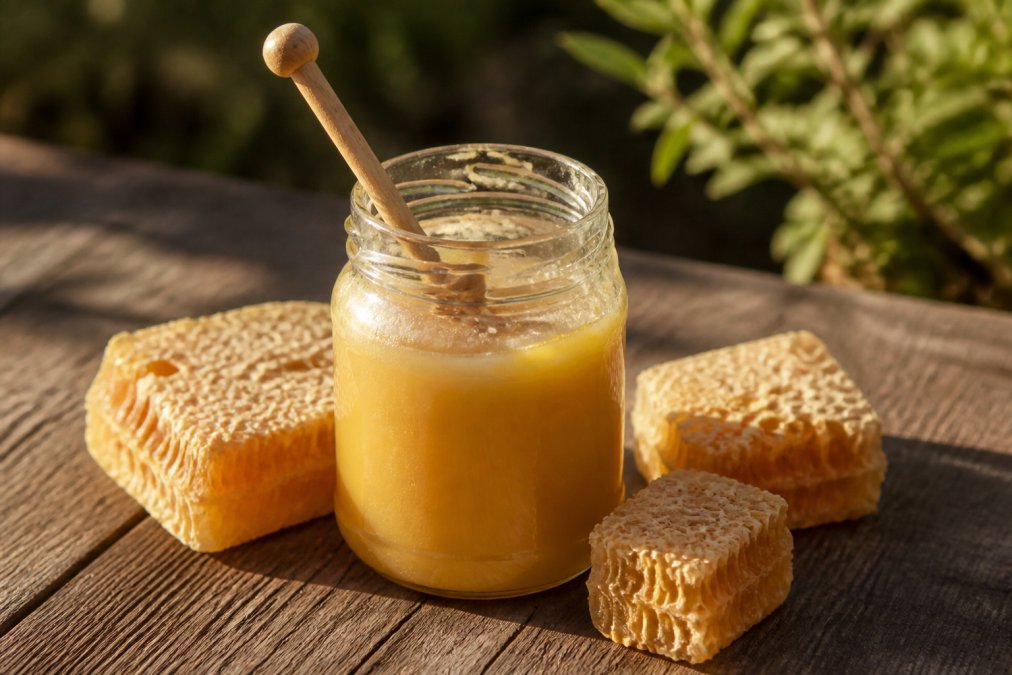
Raw unfiltered honey is honey taken straight from the hive and strained to remove large debris like beeswax fragments, with nothing else added or taken away. Unlike the clear, uniform jars found on most supermarket shelves, it retains the natural pollen, propolis, and enzymes that heat processing destroys.
Most commercial honey is pasteurised and micro-filtered to delay crystallisation and create that smooth, see-through appearance. The trade-off is real: those processes strip away many of the beneficial compounds that make honey more than just a sweetener.
7 Science-Backed Benefits of Raw Unfiltered Honey
Research into this traditional food continues to reveal why it has been used medicinally for thousands of years. These seven areas represent the most compelling reasons to make the switch from processed varieties.
Rich in Antioxidants and Plant Compounds
Raw honey's antioxidant capacity primarily comes from flavonoids such as quercetin, kaempferol, and chrysin, alongside phenolic acids like caffeic and ferulic acid. These compounds neutralise free radicals linked to cellular damage and premature ageing. The concentration varies by floral source: darker varieties like buckwheat or heather typically exhibit higher phenolic content than lighter honeys like acacia. Because raw honey avoids pasteurisation's high temperatures, it retains a more complete profile of these heat-sensitive compounds.
Antibacterial and Wound-Healing Properties
Honey's antibacterial activity is a multi-faceted defence system attributed to several synergistic mechanisms:
- Osmotic Effect: Honey is a supersaturated sugar solution with very low water activity. When applied to a wound, it draws moisture out of bacterial cells via osmosis, dehydrating and killing them.
- Acidity: The pH of honey is typically between 3.2 and 4.5 (peer-reviewed research). This acidic environment is inhospitable for many pathogenic bacteria that thrive at a neutral pH.
- Hydrogen Peroxide: When honey is diluted by wound exudate, the enzyme glucose oxidase, which is added by bees, slowly generates hydrogen peroxide. This provides a steady, low-level antiseptic effect that is less damaging to tissue than commercial antiseptics.
- Methylglyoxal (MGO): Unique to Manuka honey from the Leptospermum scoparium bush in New Zealand, MGO provides a potent, non-peroxide antibacterial activity that remains stable even when diluted.
This is why medical-grade honey is licensed for treating minor burns, venous leg ulcers, and diabetic foot ulcers. For home use, raw honey from a trusted source can be applied to minor cuts and abrasions, but it is not a substitute for professional medical care on serious wounds.
Soothing Coughs and Sore Throats
The World Health Organization recommends honey as a potential treatment for acute coughs in children. Its thick consistency coats the throat, and its sweet taste triggers a reflex antitussive effect. A 2021 systematic review in BMJ Evidence-Based Medicine found honey superior to usual care for improving upper respiratory tract infection symptoms, particularly cough frequency and severity (PubMed). It is a safer, more natural option for children over one year old.
Prebiotic Support for Gut Health
Raw honey acts as a prebiotic, providing food for beneficial bacteria in the colon. Its oligosaccharides pass undigested into the large intestine, where they are fermented by species like Bifidobacterium and Lactobacillus, producing short-chain fatty acids like butyrate that nourish colon cells. Natural enzymes such as amylase and invertase also aid digestion. Unlike refined sugar, honey's complex sugars selectively support a balanced internal ecosystem.
A Gentler Option for Blood Sugar
All honey is primarily carbohydrate (roughly 38% fructose and 31% glucose), so moderation is essential. However, honey's glycemic index generally ranges from 35 to 58, lower than refined white sugar's GI of 65 (glycemicindex.com). This slower absorption is attributed to fructose's distinct metabolism and trace minerals that may influence insulin sensitivity. Swapping refined sugar for a small amount of raw honey can reduce post-meal blood sugar spikes, but it is not a free pass to consume without limit.
Anti-Inflammatory Properties
Chronic inflammation drives many modern diseases, including heart disease, arthritis, and neurodegenerative conditions. The polyphenols and flavonoids in raw honey modulate inflammatory enzymes and cytokines such as cyclooxygenase-2 (COX-2) and tumour necrosis factor-alpha (TNF-α). Regular consumption may help lower systemic inflammation, a distinct benefit from its topical antibacterial action.
Heart Health and Cholesterol Reduction
The antioxidants in raw honey may contribute to cardiovascular health. Oxidative stress drives LDL cholesterol oxidation, a critical step in arterial plaque formation, and honey's flavonoids have been shown to reduce this. Some small-scale studies found modest reductions in total cholesterol, LDL, and triglycerides, with potential increases in HDL. Findings are not conclusive, so honey should be viewed as a healthier alternative to refined sugars within a diet rich in whole foods.
Raw Honey vs Pasteurised Honey: What's the Real Difference?
The distinction between raw honey vs pasteurised honey comes down to processing. Pasteurisation heats honey to around 70°C to kill yeast and prevent fermentation, while micro-filtration forces it through fine screens to remove pollen and other particles.
Many beekeepers and health advocates argue that filtering out pollen removes a key marker of authenticity. Some regulatory bodies have discussed requiring pollen testing to verify honey origin precisely because filtered honey is so difficult to trace. Raw, unfiltered honey keeps the pollen, propolis, and enzymes that make each batch unique to its region and season.
| Feature | Raw Unfiltered Honey | Pasteurised Honey |
|---|---|---|
| Heat treatment | None | Heated to ~70°C |
| Pollen content | Retained | Removed by filtration |
| Enzymes and antioxidants | Preserved | Largely destroyed |
| Texture over time | Crystallises naturally | Stays liquid longer |
| Flavour profile | Complex, floral, varies by batch | Uniform, mild |
Honey and Hay Fever Relief: Does Local Raw Honey Help?
The theory behind honey and hay fever relief is straightforward: consuming local honey exposes you to small amounts of regional pollen, potentially building tolerance over time. Many people in the South West report a genuine difference after taking a daily spoonful of local raw honey through spring.
The scientific evidence remains mixed. Studies on honey for allergic rhinitis have produced inconsistent results, partly because pollen in honey is primarily bee-collected flower pollen, not the wind-borne grass and tree pollen that trigger most hay fever. Still, anecdotal reports of relief are common enough that many allergy sufferers consider it worth trying.
How to Store Raw Honey and Keep It Fresh
Raw honey is one of the most shelf-stable foods on the planet, archaeologists have found pots in ancient Egyptian tombs over 3,000 years old and still perfectly edible. This is due to its low moisture content, high acidity, and natural hydrogen peroxide. However, how you store it at home directly affects its texture, flavour, and longevity.
Why Does Raw Honey Crystallise?
Crystallisation is a natural, physical process, not a sign of spoilage or adulteration. Honey is a supersaturated sugar solution; glucose has lower water solubility than fructose, so it precipitates and forms crystals over time. Raw, unfiltered honey crystallises faster than processed honey for two reasons:
- Pollen Particles: The tiny pollen grains retained in unfiltered honey act as nucleation sites, giving the glucose crystals a surface to form on.
- No Heat Treatment: Pasteurisation dissolves any existing crystals and slows down the re-crystallisation process, keeping commercial honey liquid for months or years.
The rate also depends on floral source. Honey with a higher glucose-to-fructose ratio, such as rapeseed or dandelion, crystallises within days of extraction; higher-fructose honeys like acacia or tupelo remain liquid much longer. Fine, smooth crystallisation is a hallmark of high-quality raw honey.
The Ideal Storage Conditions
The enemy of raw honey is not time, but moisture and heat. Optimal storage conditions:
- Airtight Container: Honey is hygroscopic, meaning it actively absorbs moisture from the air. If left open in a humid environment, the water content will rise above the safe threshold of 18%, creating conditions for yeast to ferment the honey. Always keep the lid tightly sealed when not in use. Glass jars are preferable to plastic, as they are non-porous and do not leach any flavours.
- Room Temperature: The ideal storage temperature is between 10°C and 21°C. A kitchen cupboard away from the oven, hob, or dishwasher is perfect.
- Avoid Refrigeration: Do not store honey in the fridge. Cold temperatures dramatically accelerate crystallisation, turning your honey into a solid block that is difficult to use.
- Protect from Light: Prolonged exposure to direct sunlight can degrade the enzymes and antioxidants in honey. A dark cupboard is better than a sunny windowsill.
How to Fix Crystallised Honey
If your honey has crystallised, it is easy to return it to a liquid state without destroying its beneficial properties. The key is gentle, low heat.
- Place the sealed glass jar in a bowl of warm water (not boiling, ideally around 40°C).
- Leave it for 15-30 minutes, stirring occasionally to distribute the heat.
- Repeat with fresh warm water if necessary until the crystals have dissolved.
Does Raw Honey Expire?
Properly stored raw honey does not spoil in the traditional sense, it will not grow mould or harmful bacteria. Over several years, its colour may darken and flavour may intensify or turn slightly bitter. While safe to eat indefinitely, it is best consumed within two years of purchase. If honey ferments due to high moisture, it develops a yeasty, alcoholic smell and foamy surface; while not dangerous, it should be discarded.
How to Spot Authentic Raw Unfiltered Honey
Finding genuine raw unfiltered honey requires detective work, as adulteration is a recognised problem in the global honey trade. The first clue is texture: authentic raw honey is thick, cloudy, and will eventually crystallise. If a jar labelled "raw" stays perfectly liquid for years, question it.
Look for transparency in sourcing. A reputable producer should be able to tell you exactly where their hives are located and how they extract their honey. Price is another signal, as authentic raw honey costs more to produce than mass-market blends.
Ask your local producer about their bees, their season, and their extraction method. A genuine beekeeper will happily talk your ear off about all three. Our honey is sourced from the rich flora of the South West, and we offer beekeeping experience days.
Conclusion
Choosing raw unfiltered honey means choosing a food with its natural complexity intact, from antioxidants and enzymes to regional pollen and flavour. The benefits are clearest when you taste it side by side with the processed alternative.
Frequently Asked Questions
Is unfiltered raw honey better for you than pasteurised honey?
Raw unfiltered honey retains more of its natural nutrients, including enzymes, pollen, and antioxidants like flavonoids and phenolic acids, because it is not heated or finely filtered. Pasteurisation heats honey to extend shelf life and create a smooth texture, but it destroys many of these beneficial compounds. The processing difference is the key factor: raw honey offers a richer nutritional profile, while pasteurised honey is primarily a sugar substitute. For maximum benefits, choose raw unfiltered honey. Always check the label to confirm it is truly raw and not blended with cheaper syrups.
Is it safe to give raw honey to infants?
No. Raw honey, like all honey, can contain spores of Clostridium botulinum, which can cause infant botulism. This is a serious condition because an infant's digestive system is not yet developed enough to handle these spores. The NHS advises that honey should not be given to babies under 12 months of age. This applies to all honey, whether raw or pasteurised. Once a child is over one year old, their digestive system is mature enough to process the spores safely, and honey can be introduced.
What happens if you eat raw honey every day?
Eating raw unfiltered honey daily in moderation can contribute to your antioxidant intake and may support digestive health through its prebiotic properties. A typical serving is about one tablespoon, which contains around 60 calories. Because honey has a lower glycemic index than table sugar, it has a gentler effect on blood sugar, but it is still a sugar and should be used as a substitute, not an addition. Daily consumption can be part of a balanced diet, but balance it with your overall sugar intake.
Will raw unfiltered honey crystallize and go off?
Crystallization is a natural process in raw unfiltered honey and is a sign of its authenticity, not spoilage. It happens because the natural glucose forms crystals over time. To store raw honey, keep the jar sealed in a cool, dry place away from direct sunlight. If it crystallizes, place the jar in a bowl of warm water and stir gently until it returns to a liquid state. Stored properly, raw honey has an almost indefinite shelf life and does not go bad because of its low moisture content and natural acidity.
Finding a trusted source of genuine raw honey takes effort, but the payoff is worth it. West Country Honey captures the pure, golden essence of the South West, offering raw honey varieties, artisanal meads, and educational beekeeping days for those who want to understand where their food comes from. Explore our range and taste the difference that careful, traditional production makes.