

Table of Contents
- Why Artisan Mead Is Expensive: The Real Costs
- The Cost of Raw Honey for Mead
- Understanding the Mead Production Process
- Labour, Overhead, and Production Scaling
- Barrel-Aging and Time as an Ingredient
- Session Mead vs. Traditional Mead Pricing
- Why Mead Commands Premium Pricing: A West Country Honey Perspective
- Taxation, Regulation, and Distribution Costs
- Frequently Asked Questions
Last Updated: September 20, 2026
Why Artisan Mead Is Expensive: The Real Costs
Artisan mead expensive because it commands premium prices that often surprise first-time buyers. A bottle of quality craft mead typically costs £18-25, sometimes more for aged or specialty varieties. This isn't arbitrary pricing, it reflects genuine production challenges that mass-market beverages simply don't face.
Every bottle represents months of fermentation time, carefully sourced ingredients, and production overhead that scales poorly. Understanding where that cost comes from transforms how you evaluate the price tag.
Industrial beverages have trained consumers to expect artificially low prices. Once you understand the actual cost of raw materials, production time, and regulatory burden, premium pricing becomes the only honest option.
The Cost of Raw Honey for Mead
Quality honey is the foundation of any serious mead and represents the single largest material expense. A bottle typically requires 400-600 grams of honey, and price volatility compounds at small production scales.
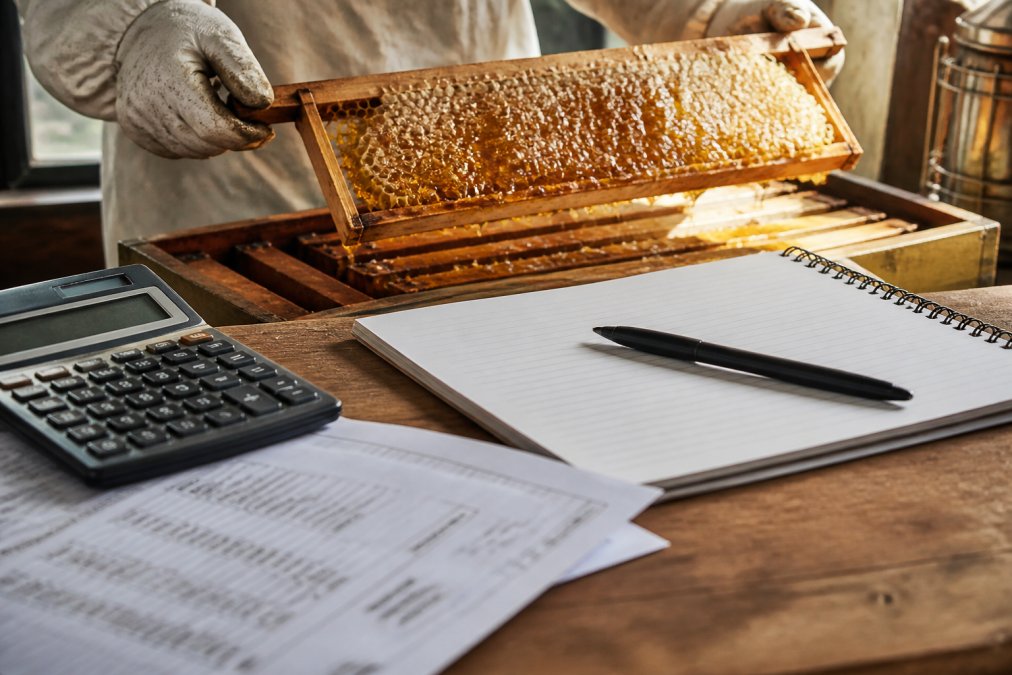
Honey pricing across scales and varieties
Commodity honey costs £3-5 per kilogram in bulk; monofloral honey (acacia, heather, wildflower) costs £8-15 per kilogram; premium artisanal honey reaches £15-25 per kilogram or higher.
A small meadery buying 25-kilogram batches at £12 per kilogram pays £300; a large brewery buying 500 kilograms at £3.50 per kilogram pays £1,750 but spreads it across vastly more bottles. The per-bottle honey cost for a craft meadery is 3-5 times higher than for industrial producers.
For a 750-millilitre bottle requiring 500 grams of honey at £12 per kilogram, the raw honey cost alone is £6. This single ingredient represents 30-40% of the final retail price before labour, packaging, tax, or overhead is factored in. By contrast, a brewery's grain cost for a comparable bottle of beer is typically £0.80-1.20.
Why honey type matters to fermentation cost
Honey varietals are not interchangeable. Acacia ferments predictably; wildflower ferments slowly and unpredictably; heather is notoriously difficult, requiring skilled yeast management to avoid stuck fermentations. Choosing difficult varieties means accepting higher production risk and longer timelines.
A stuck fermentation can ruin an entire batch. Producers must either accept this risk or invest in additional nutrient additions, temperature control, and monitoring. Either way, the cost is real.
The honey premium in context
Honey prices fluctuate 20-30% year-on-year based on harvest conditions. A meadery cannot absorb these shocks like large breweries can with long-term contracts; small producers either pass costs to consumers or absorb margin compression.
The honey cost difference alone accounts for much of the price gap between a £20 bottle of artisan mead and a £6 bottle of mass-produced cider. Raw material economics are fundamentally different.
Understanding the Mead Production Process
Mead production is deceptively simple in theory but a precision fermentation process with multiple failure points in practice.
Fermentation time and yeast management
Mead fermentation takes 4-12 months, compared to 2-3 weeks for beer and 4-8 weeks for wine. This extended timeline is a requirement of the chemistry, not a choice.
Honey ferments slowly because yeast must work harder to break down complex sugar structures. Precise pitch rates, temperature control, and nutrient additions are essential to prevent stuck fermentations.
The extended fermentation period ties up capital and production space, limiting volume and increasing per-unit overhead, carrying costs, and contamination risk.
Bottling and packaging logistics
Bottling logistics add complexity. A meadery must source bottles, corks, labels, and packaging in small quantities compared to industrial producers.
Bottling is labour-intensive; a person can hand-bottle 100-150 bottles per day. Scaling requires seasonal labour or equipment investment that only makes sense at higher volumes.
Custom label printing for small batches costs significantly more per unit than mass-produced labels.
Labour, Overhead, and Production Scaling
A meadery producing 5,000 bottles spreads fixed costs across 5,000 units; a brewery producing 500,000 barrels spreads them across vastly more volume. The mathematics are unforgiving.
Fixed costs and per-unit overhead
Rent and utilities are fixed costs. A meadery producing 3,000 bottles per year in a £15,000-per-year space pays £5 in rent per bottle; producing 15,000 bottles pays £1 per bottle. The facility cost doesn't scale down.
Equipment costs (£10,000-30,000) must be depreciated across production volume. A meadery producing 5,000 bottles spreads £20,000 across 5,000 units (£4 per bottle); a brewery spreads equivalent costs across vastly more volume.
Traditional Mead - West country Meadery →
Insurance, accounting, and regulatory compliance are largely fixed costs, negligible per unit for large producers but significant for small ones.
Labour cost structure: the critical difference
A meadery needs at least one skilled person managing fermentation at £25,000-35,000 per year, a fixed cost that doesn't scale with production volume.
For a meadery producing 5,000 bottles per year, labour costs £5-7 per bottle; at 15,000 bottles with the same staff, it drops to £2.20-2.87 per bottle. The volume, not productivity, has changed.
A large brewery has labour costs of £0.30-0.50 per unit. Small producers cannot achieve this efficiency because the minimum viable team size doesn't scale proportionally with volume.
Homebrewing vs. commercial production: the hidden cost of legitimacy
A homebrewer can make mead for £3-5 per litre in raw materials alone, avoiding rent, insurance, compliance, and bottling labour, roughly one-quarter the cost of a commercial meadery.
A commercial meadery must operate from a licensed facility, maintain insurance (£1,500-3,000 per year), comply with FSA regulations, pay alcohol duty (£2-3 per bottle), employ trained staff, and source compliant ingredients. These non-optional costs raise the homebrewer's £3 per litre to a commercial meadery's £8-12 per litre before labour, marketing, or distribution.
Economies of scale in context
Economies of scale in beer and wine production are brutal. Large producers negotiate better prices on honey (or in the case of beer, on grain). They run continuous production lines that maximise equipment use. They employ specialists in quality control, logistics, and regulatory compliance. A meadery with 2-3 staff members cannot compete on cost with operations that have dozens of employees and purpose-built infrastructure.
The small-batch producer makes a deliberate choice: accept higher per-unit costs in exchange for quality control and product uniqueness. This isn't a flaw in the model; it's the entire point. But it means premium pricing is unavoidable. A £20 bottle of artisan mead reflects not just the cost of honey and labour, but the structural reality that small-scale production cannot achieve the per-unit efficiency of industrial alternatives.
Barrel-Aging and Time as an Ingredient
Many premium meads spend time in oak barrels, which adds both cost and complexity. Barrels themselves are expensive: a new oak barrel costs £300-600, and a used barrel costs £150-300. A barrel might be used for 5-10 batches before it's retired, so the per-batch cost is still significant.
Barrel-aging ties up inventory for extended periods. A mead aged in oak for 12-24 months occupies a barrel and storage space for that entire period. The meadery cannot sell that product, cannot recoup its investment, and cannot use that barrel for another batch. This capital lock-up is a real cost, especially for small producers operating on limited cash flow.
The ageing process itself requires management. Barrels must be monitored for proper conditions, protected from temperature extremes, and protected from contamination. Some evaporation occurs, the "angel's share", which means a percentage of the batch is lost to the atmosphere. This loss is baked into pricing.
Barrel-aged meads command higher prices not just because they taste better, but because the production cost is genuinely higher. The economics don't lie: time in barrel is an ingredient, and it costs money.
Session Mead vs. Traditional Mead Pricing
Session meads, typically lower in alcohol (6-8% ABV) and lighter in body, cost less to produce than traditional meads (12-14% ABV), but the price difference is often smaller than the production difference suggests.
Session mead requires less honey per bottle, which reduces raw material cost. However, the fermentation time is often similar, the bottling and packaging costs are identical, and the overhead is unchanged. A meadery produces session and traditional meads in the same facility using the same labour. The primary saving is the honey itself.
Traditional mead, with its higher honey content and higher alcohol, costs more to produce but also commands higher prices. Consumers perceive it as a more substantial product, and the pricing reflects that perception, though the actual production cost difference is often smaller than the price difference suggests.

The real distinction is market positioning.
Why Mead Commands Premium Pricing: A West Country Honey Perspective
Mead occupies a unique position in the beverage market. It's rarer than beer or wine, produced in smaller volumes, and requires longer production cycles. These factors alone justify premium pricing. But there's another layer: consumer perception and market rarity.
Taxation, Regulation, and Distribution Costs
Mead is classified as wine for tax purposes in most jurisdictions, which means it attracts alcohol duty and VAT. These taxes are substantial and non-negotiable. A £20 bottle of mead might include £3-5 in combined duty and VAT, depending on the exact ABV and other factors.
Frequently Asked Questions
What makes artisan mead more expensive than mass-produced alternatives?
Artisan mead costs more due to several converging factors: premium honey sourcing from specific floral sources, extended fermentation cycles lasting months or years, small-batch production that prevents economies of scale, and often barrel-ageing that ties up inventory. Unlike industrial producers, craft mead makers prioritise flavour complexity and ingredient quality over volume, which directly increases the cost of goods sold and production overhead.
How does the mead production process affect the final price?
The mead production process involves careful yeast management, precise temperature control, and regular monitoring throughout fermentation, labour-intensive work that cannot be fully automated in small batches. Traditional meads may age 12-24 months or longer. Bottling logistics, labelling, and quality testing add further costs that small-batch producers cannot absorb through volume discounts.
Does honey sourcing really impact the price that much?
Yes, significantly. Sourcing high-quality honey from apiaries with specific floral profiles costs considerably more than bulk commodity honey. Artisanal producers often source from local, small-scale beekeepers rather than industrial suppliers, paying premium prices for honey varietals with distinct flavour characteristics. This raw material cost becomes the foundation of the final retail price and reflects the apiary's care and the nectar source's rarity.
Is mead more expensive to produce than craft beer?
Mead production typically costs more than craft beer due to honey's higher raw material cost compared to grain. Fermentation cycles are also longer, increasing storage and labour costs. However, mead's niche status means smaller production runs and less opportunity to achieve economies of scale, further driving up the per-unit cost. Barrel-ageing, common in premium meads, adds additional expense that most craft beers avoid.