

Table of Contents
- Why Natural Beeswax Products Belong in Every Home
- Beeswax Candles: Warmth, Light, and Cleaner Air
- Benefits of Beeswax Food Wraps for Everyday Storage
- How to Use Beeswax Pellets for DIY Projects
- Beeswax for Wood Polish and Leather Care
- Beeswax vs. Alternatives: Paraffin, Soy, and Synthetic Waxes
- Choosing Quality: Grades, Sustainability, and Troubleshooting
- Frequently Asked Questions
Last Updated: September 14, 2026
Why Natural Beeswax Products Belong in Every Home
Natural beeswax products for home use are among the most versatile items you can keep in a cupboard, and this guide from West Country Honey explores every practical application. Beeswax is a natural wax produced by honeybees to build the honeycomb structure inside the hive. It is non-toxic, biodegradable, and lasts for years when stored correctly.
Unlike synthetic alternatives, beeswax requires no chemical processing to become useful. A single block can polish furniture, seal fabric, condition leather, and make candles that burn cleanly. Below, we'll show you exactly how to choose, melt, and apply it across eight everyday uses.
Beeswax Candles: Warmth, Light, and Cleaner Air
Beeswax candles are the simplest entry point into natural wax. They burn with a warm, honeyed aroma and produce minimal soot.

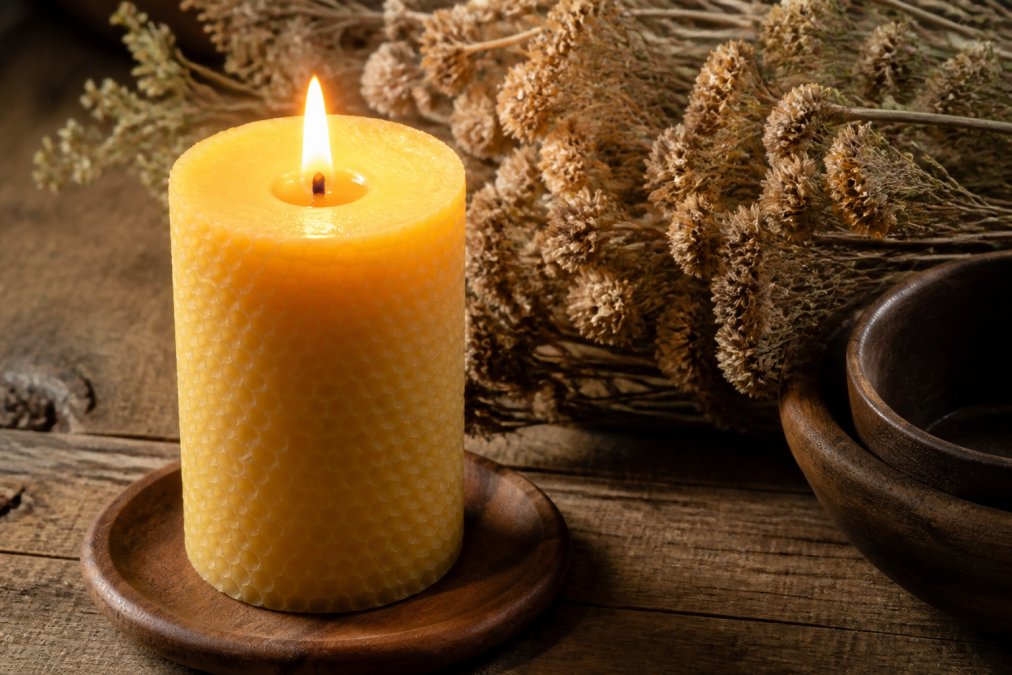
West Country Honey makes a range of hand-poured candles in Somerset, including the Large Solid Cast Beeswax Candle (£69.00 for a set of ten) and the Bear Beeswax Candle (£6.99). Burning times vary because each one is hand made, and colour and aroma shift naturally from batch to batch.
| Candle | Price | Best For |
|---|---|---|
| Bear Beeswax Candle | £6.99 | Small gifts, table settings |
| Medium Pillar Beeswax Candle | £7.00 | Everyday use |
| 3 x Lion Beeswax Candle | £16.00 | Mantelpiece displays |
| 3 x Christmas Tree Beeswax Candles | £21.00 | Festive decorating |
| 10 x Large Solid Cast Beeswax Candle | £69.00 | Bulk buying, events |
Benefits of Beeswax Food Wraps for Everyday Storage
The benefits of beeswax food wraps come down to one thing: they replace single-use plastic without changing how you store food. A wrap is cotton coated in beeswax, jojoba oil, and pine resin. Warmth from your hands makes it pliable, and it holds its shape once cool.

The Family Bundle of Beeswax Food Wraps (£60.00) includes four large, four medium, and four small wraps. Small wraps suit vegetable halves and jars, medium ones handle sandwiches and cheese, and large wraps cover casserole dishes or a loaf of bread.
How to Clean and Refresh Your Wraps
Wash wraps in cold water with a little soap, then hang them to dry. Every few months, lay them on baking paper in a 100C oven for no more than two minutes to pasteurise the wax. Never wrap hot food, and keep wraps out of the microwave (Honey Risk Profile).
How to Use Beeswax Pellets for DIY Projects
Learning how to use beeswax pellets for DIY projects starts with two variables most guides skip: the grade of the wax and the ratio of wax to oil. Get those right and almost every home recipe works first time.
Beeswax melts at roughly 62-64C, so a double boiler, or a heatproof bowl over simmering water, gives you control that direct heat does not (the NHS). Pellets and blocks behave the same way once melted; pellets simply measure more easily and melt more evenly because of their surface area.
Which Grade to Use for Which Project
Beeswax is sold in three broad grades, and choosing the wrong one is the most common reason a project disappoints.
| Grade | What It Is | Best For | Watch Out For |
|---|---|---|---|
| Cosmetic grade | Filtered and refined to remove debris, pollen and most aroma | Salves, lip balm, lotion bars, baby products | Higher cost; little natural scent |
| Filtered (craft) grade | Strained but not heavily refined; retains colour and honey scent | Candles, food wraps, wood polish | May carry faint sediment |
| Crude / unrefined | Straight from the capping process, dark and strongly scented | Garden tool treatment, rustic candles, waterproofing | Debris can clog wicks and strain cloth |
Core Ratios to Memorise
- Salve or balm: 1 part beeswax to 4 parts carrier oil by weight (for example 30g wax to 120ml oil).
- Firmer lotion bar: 1 part beeswax to 3 parts oil, plus 1 part solid butter such as shea.
- Wood polish: 1 part beeswax to 1 part food-safe oil, applied thin.
- Food wrap coating: roughly 1 part beeswax to 1 part resin and a small splash of jojoba oil per square of cotton.
Step-by-Step: Making a Simple Salve
- Set a heatproof bowl over a pan of simmering water.
- Add 30g cosmetic-grade beeswax pellets and 120ml carrier oil, such as olive or sweet almond.
- Stir until the wax fully dissolves, then remove from heat.
- If you want a softer balm, add 5-10ml more oil now and stir again.
- Pour into small tins and leave to set at room temperature, not in the fridge.
- Label with the date; the salve keeps for around twelve months.
Expected Result: A firm balm that softens on contact with skin. Adjust the ratio if you want it softer or harder.
Melting Without Burning
Beeswax scorches above about 85C, which dulls the colour and gives off a sharp smell (Aston Martin Aramco F1® Team Celebrates BSI Certifications). Keep the water at a bare simmer, never a rolling boil, and take the bowl off the heat as soon as the last pellet disappears. If you are melting a large batch for candles, a dedicated wax melter with a thermostat is easier to control than a pan.
Cleaning Up
Wax residue comes off bowls and utensils with hot water and a little washing-up liquid, or by wiping with a piece of kitchen paper while still warm. Never pour leftover wax down a sink, it sets hard in the trap.
Beeswax for Wood Polish and Leather Care
Beeswax works as a natural sealant for wood and leather because it repels water while letting the surface breathe. A simple polish combines equal parts beeswax and a food-safe oil, applied thinly with a cloth and buffed once dry.
For leather, a beeswax salve restores shine and adds a degree of waterproofing. Test on a hidden area first, since darker waxes can shift the colour of pale leather.
Beeswax vs. Alternatives: Paraffin, Soy, and Synthetic Waxes
Beeswax is not the only option, and the differences matter. Paraffin is cheaper but petroleum-derived. Soy wax is plant-based and burns cooler, though it softens in warm weather. Synthetic waxes offer consistency but none of the biodegradability.
| Wax Type | Source | Melt Point | Best For |
|---|---|---|---|
| Beeswax | Hive products | 62-64C | Candles, wraps, salves, polish |
| Paraffin | Petroleum | 46-68C | Cheap candles |
| Soy | Soybean oil | 46-52C | Container candles |
| Synthetic | Blended polymers | Varies | Uniform commercial batches |
For home projects where non-toxic materials matter, beeswax remains the strongest all-round choice.
Choosing Quality: Grades, Sustainability, and Troubleshooting
What 'Natural' Actually Means on a Label
Common DIY Failures and Fixes
- Wraps won't stick: too little wax, or the wax layer is uneven. Re-melt and add more, spreading it thinly across the whole square rather than the centre.
- Wraps feel tacky and leave residue: too much resin or oil in the mix. Re-melt with an extra spoonful of beeswax to firm it up.
- Salve turns grainy: it cooled too fast, so the wax crystallised. Re-melt gently and stir slowly as it cools, or pour into tins that have been warmed first.
- Candle tunnels down the middle: the wick is too small for the diameter, or it was not trimmed. Trim to 5mm before each burn and let the melt pool reach the edge on the first burn.
- Candle cracks as it sets: poured too hot or cooled too quickly. Pour at around 65C and let it set somewhere draught-free.
- Polish leaves streaks: too much applied at once, or the surface was still damp. Buff with a clean cloth and apply in thin layers.
- Leather darkens unevenly: the wax was applied cold. Warm the salve slightly in your hands and work it in with a soft cloth in small circles.
Storing Wax So It Lasts
Beeswax keeps for years if kept cool, dry and out of direct sunlight. Store blocks wrapped in paper rather than cling film, which can leave a residue, and keep pellets in an airtight jar. If a block develops a pale bloom on the surface, that is harmless, it is just wax crystallising and it melts back in without affecting performance.
The Beeswax Wrap Kit (£15.99) is a good example of a starter set: it includes ten cotton squares, two wax blocks, parchment paper, and full instructions.

Frequently Asked Questions
What are the benefits of using natural beeswax products in the home?
Natural beeswax products offer a range of benefits, including being non-toxic and biodegradable. Beeswax candles burn cleaner than paraffin. Beeswax food wraps provide a reusable alternative to plastic cling film, keeping food fresh. Additionally, beeswax can be used for wood polishing, leather conditioning, and DIY cosmetics, making it a versatile staple for homes.
Are beeswax products safe for food storage?
Yes, beeswax is food-safe when it is pure. Beeswax food wraps are made from cotton infused with beeswax, jojoba oil, and pine resin. They are ideal for wrapping cheese, vegetables, and covering bowls. However, avoid using them with raw meat or hot foods, as the wax can melt. Always clean wraps with cold water and mild soap to maintain their effectiveness.
How do you clean and maintain beeswax food wraps?
To clean beeswax food wraps, wash them with cold water and a mild soap, then hang to dry. Avoid hot water as it can melt the wax. Every few months, refresh the wraps by placing them on baking paper in an oven at 100°C for no more than 2 minutes. This re-pastes the wax, extending their life. Do not use them in the microwave or with hot foods, and store them away from direct heat.
What is the difference between yellow and white beeswax?
Yellow beeswax is unrefined and retains natural honey and pollen residues, giving it a golden colour and honey-like aroma. White beeswax has been filtered and bleached naturally, resulting in a neutral colour and scent. Both have similar properties, but yellow beeswax is often preferred for candles and salves where a natural scent is desired, while white beeswax is used in cosmetics where colour and fragrance need to be controlled.
Can beeswax products help improve indoor air quality?
Beeswax candles can contribute to better indoor air quality. For best results, choose pure beeswax candles with cotton wicks and ensure proper ventilation.
Choosing the right natural beeswax products for home comes down to matching the grade to the job, and buying from a supplier who can trace where the wax began. West Country Honey makes candles, food wraps, and wrap kits from beeswax sourced from our own hives in Somerset, alongside raw honey and artisanal mead. Explore the full range and find the pieces that fit your home.