
Table of Contents
- Selecting Honey Varietals for Your Tasting
- Essential Equipment and Tools for Honey Tasting
- The Step-by-Step Honey Tasting Process
- Using Honey Tasting Scorecards to Document Your Findings
- Honey and Cheese Pairing Guide for Your Event
- Creating the Right Atmosphere and Setting
- Palate Cleansers and Food Pairings
- Safety, Allergies, and Sustainability Considerations
- Frequently Asked Questions
Last Updated: September 23, 2026
How to host a honey tasting brings people together to explore flavours, aromas, and textures in ways that ordinary consumption never allows. Structured tastings transform casual honey appreciation into genuine discovery. This guide walks you through every step, from selecting varietals to creating the right atmosphere.
Selecting Honey Varietals for Your Tasting
Select contrasting flavour profiles so guests detect real differences. A monofloral honey offers a pure expression of its terroir; a polyfloral blend captures the complexity of multiple flowers.
Consider these pairing strategies:
- Light and floral: Acacia or wildflower honey, with delicate aroma profiles
- Medium and balanced: Clover or heather honey, offering moderate sweetness and complexity
- Dark and strong: Buckwheat or chestnut honey, with pronounced caramel notes and deeper mouthfeel
- Specialty varieties: Raw honey in its most natural state, showcasing unfiltered pollen and enzymes
Essential Equipment and Tools for Honey Tasting
A few simple items create a professional tasting experience and help guests evaluate honey systematically.
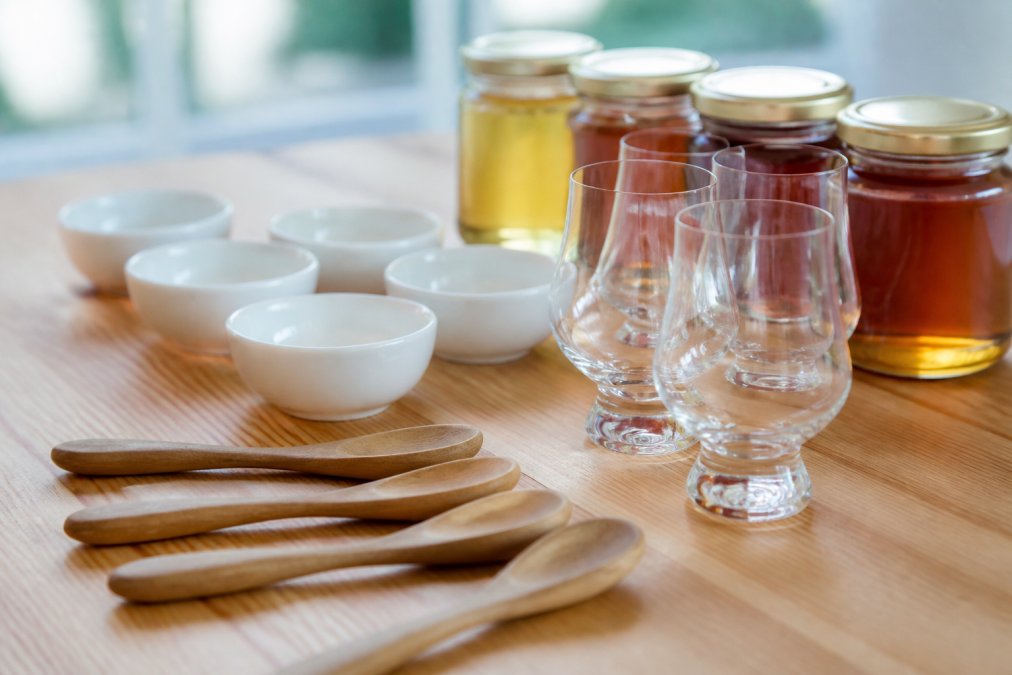
Gather these essentials:
- Tasting spoons: Small, shallow spoons let guests sample without taking too much. Wooden spoons work well and don't affect flavour
- Small white bowls or cups: White ceramic or glass shows colour and clarity best. Avoid coloured or dark vessels
- Water glasses: Plain drinking glasses for palate cleansing between samples
- Honey jars: Use clear glass so guests see the colour spectrum. Label each with variety name and origin
- Tasting scorecards: Simple printed sheets help guests document observations
- Honeycomb samples: If available, include a small piece of comb honey to show honey in its purest state
The Step-by-Step Honey Tasting Process
A structured approach reveals details most people never notice when tasting honey casually.
Evaluating Colour and Clarity
Pour a small amount into a white bowl and hold it to light. Light honey appears water white or pale yellow; medium ranges from golden to amber; dark shows deep amber or brown. Filtered honey looks transparent; raw honey may show cloudiness from pollen and crystallization. Both are normal.
Assessing Aroma and Olfactory Notes
Aroma reveals complexity before taste. Have guests bring the bowl close to their nose and take a deeper sniff. What do they notice, floral notes, caramel, fruit, or spice?
Provide simple vocabulary:
- Floral: Rose, lavender, clover, wildflower
- Fruity: Apple, citrus, stone fruit, berry
- Spiced: Cinnamon, clove, ginger, nutmeg
- Earthy: Hay, grass, soil, wood
- Sweet: Caramel, toffee, vanilla, honey itself
Tasting and Evaluating Flavour Profile
Place honey on the tongue, move it around for 5-10 seconds, notice how flavour develops, then swallow and observe the aftertaste. Ask guests to describe mouthfeel: thick or thin, smooth or grainy. Light honey tastes delicate with floral sweetness; dark honey brings caramel depth and complexity.
Using Honey Tasting Scorecards to Document Your Findings
A simple scorecard transforms casual observation into structured evaluation and gives guests a record to take home.
| Honey Variety | Colour | Aroma Notes | Flavour Profile | Mouthfeel | Overall Rating |
|---|---|---|---|---|---|
| Sample 1 | Light amber | Floral, clover | Sweet, mild | Smooth | 7/10 |
| Sample 2 | Dark amber | Caramel, spice | Rich, complex | Thick | 9/10 |
| Sample 3 | Water white | Delicate, light | Subtle, floral | Thin | 6/10 |
Honey and Cheese Pairing Guide for Your Event
Cheese and honey are natural partners, salty, creamy cheese balances honey's sweetness, and honey's complexity complements cheese's depth.
Match honey varieties to cheese types:
- Light, delicate honey pairs with mild cheeses: ricotta, fresh mozzarella, chèvre, feta
- Medium, balanced honey suits semi-hard cheeses: cheddar, gouda, manchego, gruyère
- Dark, strong honey complements aged, hard cheeses: aged cheddar, parmesan, emmental, pecorino
Creating the Right Atmosphere and Setting
Choose a quiet room with good natural light and avoid strong cooking smells or perfumes. Honey tastes best at room temperature (18-20°C); cold honey becomes thick and flavours mute, while warm honey tastes too sweet.
Palate Cleansers and Food Pairings
Between samples, guests need to reset their palates. Without cleansing, flavours blend and become indistinguishable. The wrong cleanser can interfere with the next tasting.
Traditional Mead - West country Meadery →
Best palate cleansers:
- Water: Plain, room temperature. Neutral and effective
- Unsalted crackers or bread: Mild starch absorbs lingering honey
- Apple slices: Natural acidity cuts through sweetness
- Cucumber: Refreshing and neutral
- Herbal tea: Chamomile or peppermint, served warm
Safety, Allergies, and Sustainability Considerations
A structured approach to allergies, infant safety, and ethical sourcing protects your guests and builds trust.
Allergy Screening and Bee-Product Sensitivities
Conduct a simple allergy screening in your invitation or pre-event questionnaire, asking about bee product allergies, pollen allergies, relevant medications, and whether any infants under 12 months will attend.
Raw Honey Disclosure and Pollen Content
Before the tasting, clearly state which samples are raw and which are filtered. Raw honey is unfiltered and may contain visible pollen or cloudiness; filtered honey is processed to remove pollen. Both are safe for ages over 12 months. Never surprise guests with undisclosed raw honey.
Infant Botulism: The One Real Risk
Honey poses a documented risk to infants under 12 months: botulism from Clostridium botulinum spores. The risk is extremely low (fewer than 100 cases per year worldwide), but real. Do not serve any honey, raw or processed, to infants under 12 months old.
Fermented Honey Products: Mead and Alcohol Considerations
If your tasting includes mead or alcohol-based honey products, disclose alcohol content (ABV), note that guests should not drive after consuming alcohol, and that pregnant women should avoid alcohol. Offer non-alcoholic alternatives for every alcoholic sample. Check your organisation's alcohol policy if hosting a workplace event.
Medication Interactions
Honey and bee products can interact with anticoagulants, diabetes medications, immunosuppressants, and antihistamines. Ask guests to inform you of relevant medications and suggest they consult their GP if unsure whether honey tasting is safe for them.
Sustainability and Ethical Sourcing Checklist
Before purchasing honey for your tasting, verify:
- Local sourcing: Is the honey produced within the region? Local honey supports regional beekeepers and reduces carbon footprint.
- Beekeeper practices: Does the producer use humane hive management? Avoid producers that clip queen wings or practice extreme culling.
- Pesticide use: Are the apiaries located in areas free from neonicotinoid pesticides and other bee-toxic chemicals?
- Habitat protection: Does the producer plant forage crops or protect wild flowering plants?
- Fair trade or ethical certification: Look for Fairtrade, Rainforest Alliance, or equivalent certifications if sourcing from overseas.
- Transparency: Can the producer provide information about their bees, their land, and their practices? Reputable producers are open about their methods.
- Raw vs. processed: Raw honey retains more enzymes and pollen, supporting bee health narratives. Processed honey is still ethical if sourced responsibly.
Example:
Clover Honey - Sourced from Meadowbrook Apiaries, Somerset
Produced by third-generation beekeeper Jane Smith. Bees forage on organic clover pastures and wildflower meadows. No pesticides used. Honey is raw and unfiltered, retaining all natural enzymes and pollen.
Pre-Event Safety Checklist
One week before your tasting, complete this checklist:
- ☐ Sent allergy screening questionnaire to all guests
- ☐ Reviewed responses and identified any high-risk attendees
- ☐ Confirmed no infants under 12 months will attend (or made alternative arrangements)
- ☐ Verified alcohol content of any fermented products
- ☐ Checked workplace or venue alcohol policy if applicable
- ☐ Prepared clear labels for raw vs. filtered honey
- ☐ Printed sourcing story cards for each honey variety
- ☐ Prepared non-alcoholic alternatives for every alcoholic sample
- ☐ Arranged secure storage of all honey samples away from children's reach
- ☐ Briefed co-hosts on allergy protocols and emergency procedures
Frequently Asked Questions
What equipment do I need to host a professional honey tasting?
At minimum, you'll need small white ceramic bowls or tasting spoons to evaluate colour and clarity, clear glasses for visual assessment, and palate cleansers such as water and plain bread. A notepad or honey tasting scorecard helps document aroma profiles, flavour intensity, and aftertaste. For a more formal event, consider providing tasting flights, small portions of multiple varietals arranged for sequential evaluation. White bowls are essential because they don't distort colour perception, which is crucial for assessing the full colour spectrum from water white to deep amber.
How do I prepare a honey tasting flight?
Arrange 3-5 honey samples in small bowls or spoons, progressing from lightest to darkest or from mildest to most complex in flavour. Start with delicate, floral monofloral honeys before moving to richer, polyfloral blends. Allow 15-20 minutes between tastings for your palate to reset. Serve at room temperature so volatile aromatic compounds are fully perceptible. Provide water and plain bread between samples to cleanse your palate. This structured approach helps tasters isolate sensory qualities and appreciate the terroir and nectar source differences.
What foods pair best with artisanal honey?
Soft cheeses like brie and goat cheese pair beautifully with floral-noted honeys, while aged cheddar complements darker, caramel-toned varietals. Charcuterie, particularly cured meats, balances honey's sweetness with savoury depth. Nuts, especially almonds and walnuts, enhance mouthfeel and bring out subtle flavour notes. Fresh fruit, crackers, and bread provide textural contrast. Avoid overly spiced foods that mask delicate aroma profiles. The key is allowing the honey's unique character to shine rather than competing with bold flavours.
How should I store raw, unfiltered honey after a tasting event?
Store raw honey in a cool, dark place away from direct sunlight. Crystallization is natural and does not indicate spoilage; simply warm the jar gently in warm water to restore fluidity if desired. Raw, unfiltered honey has a longer shelf life than processed alternatives because it retains pollen, enzymes, and propolis, which act as natural preservatives. Keep the lid sealed tightly to prevent moisture absorption. Avoid refrigeration, as cold temperatures accelerate crystallization.