

Table of Contents
- What to Expect at a Beginner Bee Class
- Beekeeping Experience Day Cost: Breaking Down the Price
- Is Beekeeping an Expensive Hobby to Start?
- Physical Requirements and Accessibility: Who Can Take Part
- Skill-Based Learning Outcomes from a Beekeeping Experience
- Ethical Considerations: Bee Conservation and Sustainable Practice
- Beekeeping Experiences for Mental Wellbeing and Corporate Days
- Conclusion: Who Gets the Most Value from Beekeeping Experiences
- Frequently Asked Questions
Last Updated: September 11, 2026
What to Expect at a Beginner Bee Class
Are beekeeping experiences worth the price? For most people, yes, if you know what you are buying. A beginner bee class is a hands-on introduction to working a live hive, not a lecture.
At West Country Honey, our experience days run on this principle: you suit up, open a hive, and handle frames yourself. Knowing what a session involves is the fastest way to judge the fee.
A Typical Three to Four Hour Session
Most sessions follow a predictable shape. You arrive, get kitted out, and start with an introduction to beekeeping: how a colony is organised, what the queen does, how worker and drone bees divide labour, and why pollination matters. Then you taste honey, and often mead for adults, before the hives.
Apiary work fills the middle of the day: a solid outdoor stretch of standing and lifting, with a break partway through. Sessions close with a debrief, questions, and usually a small take-home item.
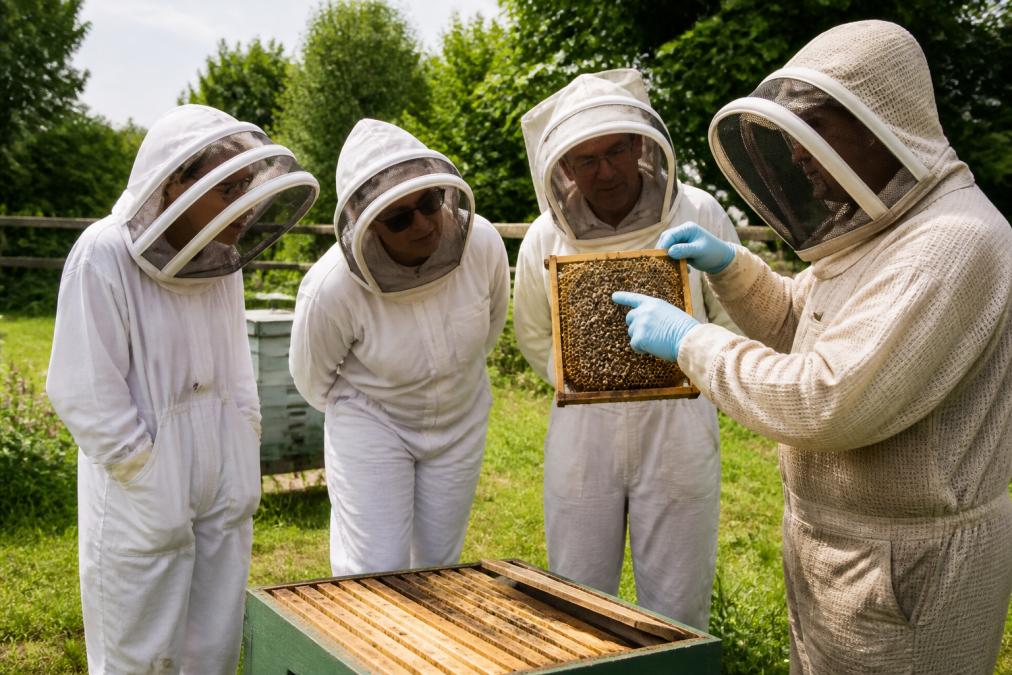
Hands-On Apiary Activities and Equipment Provided
Protective gear is supplied: a full bee suit, gloves, and a smoker are standard kit, buying your own before you commit is an expensive mistake. Wear sturdy boots and long trousers.
During a hive inspection you will typically:
- Lift frames out of the brood box and look for eggs, larvae, and capped cells
- Try to spot the queen, which is harder than it looks
- Watch pollen and honey stores being built up
- Discuss colony health, pests, and seasonal hive management
That hands-on learning is the point: reading about a hive inspection and performing one are entirely different.
Beekeeping Experience Day Cost: Breaking Down the Price
A beekeeping experience day cost in the UK generally falls between £70 and £180 per person, depending on duration, group size, and inclusions (bbka.org.uk). West Country Honey's Bee Experience Day is £80 for a three to four hour session with equipment and tuition; the Beekeeping Experience Day plus Traditional Mead is £99 and adds a bottle of mead for over-18s.

For anyone weighing up whether to go further, the 2 Day Beekeeping Course is £179 and moves from taster into genuine skill-building: hive management, honey extraction, pest and disease management, and seasonal planning.
Corporate Beekeeping Experience Days start at £1,000 for a group booking, aimed at team building and wellbeing days rather than individual hobbyists.
What You Pay For at Different Price Points
The price reflects three things: time, instruction ratio, and what you take home. A three-hour group session with shared equipment sits at the lower end. A two-day course with structured curriculum and take-home resources sits at the top.
| Experience | Price | Duration | Best For |
|---|---|---|---|
| Bee Experience Day | £80 | 3-4 hours | Curious beginners, gift buyers |
| Experience Day plus Mead | £99 | 3-4 hours | Gifts, couples, mead lovers |
| 2 Day Beekeeping Course | £179 | Two days | People considering the hobby |
| Corporate Experience Day | From £1,000 | Half or full day | Teams, wellbeing days |
The cost-benefit analysis is straightforward. If you are curious, the £80 taster answers your question in an afternoon. If you are seriously considering a hive, the two-day course is cheaper than buying equipment you may never use.
Is Beekeeping an Expensive Hobby to Start?
Beekeeping is a moderately expensive hobby to start, with realistic first-year costs running into several hundred pounds once you account for a hive, protective gear, tools, and the bees themselves. The experience day fee is a small fraction of that, which is why it makes sense as a first step.

A beginner beekeeping setup usually includes:
- A hive and frames
- A bee suit, gloves, and boots
- A smoker and hive tool
- A colony of bees, often the single largest line item
- Feed, treatments, and replacement parts
The Real Cost of Hives, Suits, and Smokers
The kit list is longer than most people expect, and it does not stop at the hive. Suits wear out. Smokers need fuel. Frames need replacing. Colonies sometimes fail over winter and need restocking, which is a cost you absorb without any honey to show for it.
Honey extraction adds another layer: an extractor, jars, labels, and storage. Many new beekeepers underestimate this.
Physical Requirements and Accessibility: Who Can Take Part
Most beekeeping experience listings mention safety but skip the physical reality of the day, the most common reason people either struggle or feel misled. Treat this as your pre-booking checklist.
What the Day Actually Demands of Your Body
A typical three to four hour session involves:
- Standing for 60-90 minutes at a stretch during the apiary portion, usually on grass or uneven ground
- Lifting and holding frames, a full brood frame can weigh several kilograms once loaded with honey and brood, and you may hold it at arm's length while a beekeeper points things out
- Bending and squatting to inspect lower boxes or pick up tools
- Heat load, a full bee suit is effectively a sealed layer. On a warm day, core temperature rises quickly, and providers rarely build in more than a short water break
- Walking from a car park or visitor area to the hives, sometimes over rough ground
None of this is extreme, but it is more physical than a farm park or distillery tour. If you can manage a brisk hour-long walk with a few stops, you will almost certainly cope.
Who Providers Typically Cannot Accept
West Country Honey's participant guidelines are representative of the sector: minimum age 13, not suitable for wheelchair users, and not suitable for anyone with a bee or wasp sting allergy. The allergy exclusion is non-negotiable across virtually every provider, if you carry an adrenaline auto-injector for stings, do not book (the CDC).
Conditions That Need a Conversation Before You Book
These are not automatic exclusions, but they change what a good provider will offer:
- Back, knee, or hip problems, ask whether seating is available near the hives and whether frames can be brought to you
- Heat sensitivity or a heart condition, ask about session timing (early morning is cooler), shade, and whether the suit can be removed between inspections
- Pregnancy, many providers advise against close hive work, due to physical strain and the small risk of an unexpected sting reaction
- Mobility aids, a walking stick is usually fine; a frame or rollator on grass is often not
- Neurodivergence or anxiety around insects, a good provider will let you observe from a distance in a suit without entering the working area, a legitimate way to take part
Questions Worth Asking Any Provider
Before you pay, ask these five questions. The answers tell you more than any marketing page:
- Is the apiary on level ground, and how far is the walk from parking?
- How many people are in a group, and how many suits are available?
- Is there shade, seating, and drinking water on site?
- What happens if I need to step away mid-session?
- Do you carry public liability insurance and a first aid kit on site, and is anyone present trained in sting response?
A provider who answers plainly has thought about accessibility; one who deflects is telling you something too.
Skill-Based Learning Outcomes from a Beekeeping Experience
A well-run experience day teaches transferable skills, not just facts. By the end you should be able to identify the three castes in a colony, explain what a brood frame tells you about colony health, and describe how a smoker keeps bees calm during an inspection.
That is the difference between a zoo visit and a lesson: the skills are specific and checkable, which makes the fee defensible.
What most guides miss is that the learning curve continues after you leave. Many participants find the day gives them enough vocabulary to read a beekeeping manual properly. The [Haynes Beekeepers Manual(/products/untitled-jan15_04-29) | west-country-honey.net] is a sensible follow-up for exactly this reason, and it costs £19 rather than hundreds.
Ethical Considerations: Bee Conservation and Sustainable Practice
Bee conservation is a genuine part of responsible apiculture, and a good experience day should address it rather than treat bees as a novelty. Honey bees are livestock, not wildlife, and keeping them well means managing disease, avoiding overstocking, and supporting forage rather than competing with wild pollinators.
Ask providers how they handle varroa, whether they treat colonies or manage them treatment-free, and what happens to colonies that fail. The answers tell you more about the operation than the marketing copy does. The British Beekeepers Association publishes guidance on colony welfare and seasonal management that is worth reading before you book.
Sustainable hobby beekeeping also means local honey production and short supply chains. Buying from a producer you have actually visited is about as transparent as food sourcing gets.
Beekeeping Experiences for Mental Wellbeing and Corporate Days
Time outdoors with a single, absorbing task is why beekeeping keeps appearing in wellbeing conversations. But "it feels calming" is not a value argument, what makes the fee defensible is the mechanism, and the maths behind it.
Why the Format Works on Wellbeing
A hive inspection forces a specific mental state that most leisure spending does not:
- Single-task attention. You cannot scroll a phone in gloves, and you cannot multitask while holding a frame of live bees. The task occupies your hands, eyes, and judgement at once.
- A defined endpoint. A three to four hour session has a clear beginning, middle, and end, easier to recover from than an open-ended day out.
- Low social pressure. Conversation is optional and often replaced by shared observation, good for people who find team socials draining.
- Sensory grounding. Warmth, smell of wax and smoke, weight of a frame, hum of the colony. The opposite of a screen-based day.
Most participants describe the effect as a hard reset rather than a thrill, a different product from an adventure day, and worth pricing accordingly.
The Value Case for Individuals
Compare a £80 experience day against the alternatives at the same price point:
- A spa day is comparable in cost but passive, and the effect fades within a day or two
- A concert or theatre ticket is a few hours of passive entertainment with no skill transfer
- A short course in almost any practical subject starts around £100-£150 for a day
A beekeeping experience sits in the same bracket as a short course, and it leaves you with a checkable skill set: identifying castes, reading a brood frame, using a smoker. That makes it a better use of £80 than most leisure spending at that level.
The Corporate Case, and What It Actually Costs
Corporate bookings have grown because a team day at an apiary does something a conference room cannot: it puts people on a shared physical task with a visible result. West Country Honey's corporate days include hive inspections, queen spotting, honey extraction, and refreshments, with half-day and full-day options starting at £1,000 for a group.
Run the numbers before you dismiss that figure. A £1,000 half-day for ten works out at £100 per head, roughly a mid-range team lunch, and delivers a shared experience people remember. For twenty, it drops to £50 per head, cheaper than most away-day activities, with no venue hire, catering logistics, or facilitation.
What it does not replace is structured team development. If you need facilitated workshops on communication or conflict, book those separately. If you need a day that resets a tired team and gives them something to talk about for months, this is a strong option at a defensible per-head cost.
Where the Wellbeing Claim Gets Overstated
Be sceptical of any provider promising lasting mental health benefits. A single afternoon outdoors is not therapy and not a substitute for treatment. What it reliably delivers is a few hours of focused, screen-free attention and a genuine skill, a fair thing to pay for, but not a cure, and no honest provider will tell you otherwise.
Conclusion: Who Gets the Most Value from Beekeeping Experiences
The people who get the most from a beekeeping experience have a real question to answer: is this hobby for me, and do I want to go further? For them, the fee buys clarity no amount of reading can provide.
If you are buying a gift, the Bee Experience Day at £80 is the straightforward choice, and the £99 version with a bottle of Traditional Mead adds something to take home. If you are seriously considering a hive, the 2 Day Beekeeping Course at £179 is the better investment. Teams should look at the corporate days.

West Country Honey runs its experience days at a working apiary in North Somerset, with bee suits, gloves, and tuition included, and vouchers valid for 12 months. Get started with West Country Honey and book a date for spring, before the season fills up.
Frequently Asked Questions
What is the average cost of a beekeeping experience day?
Prices vary by what is included. A standard three to four hour session with a bee suit, gloves, and a hands-on hive inspection typically starts around £80 per person. Add a bottle of traditional mead and the price rises to about £99. A two-day course for those considering the hobby costs £179, while corporate group days are quoted separately and start from £1,000 for a full team booking.
What should I wear to a beekeeping experience?
Wear long trousers and sturdy boots or closed shoes, even though a full bee suit and gloves are provided. Avoid loose, flowing clothing, strong perfume, and dark colours, which can attract attention from the colony. Bring a hat if you are sensitive to sun, and check the weather forecast, as sessions may be rescheduled if conditions are unsuitable for opening a hive.
Do I need any prior experience to attend a beginner bee class?
No prior experience is needed. Beginner sessions are designed for complete newcomers, with a short introduction covering bee biology, colony health, and hive management before you go anywhere near the hives. The beekeeper guides you through every step, from lighting the smoker to spotting the queen, so you can take part confidently even if you have never handled bees before.
Is beekeeping an expensive hobby to start after an experience day?
It can be, but not immediately. A starter hive, bee suit, smoker, and tools typically run into several hundred pounds, before you add the bees themselves. Many people begin with a hands-on experience day, then a structured course, before committing to equipment. That staged approach lets you test your interest and learn hive management skills before spending on your own colony.